
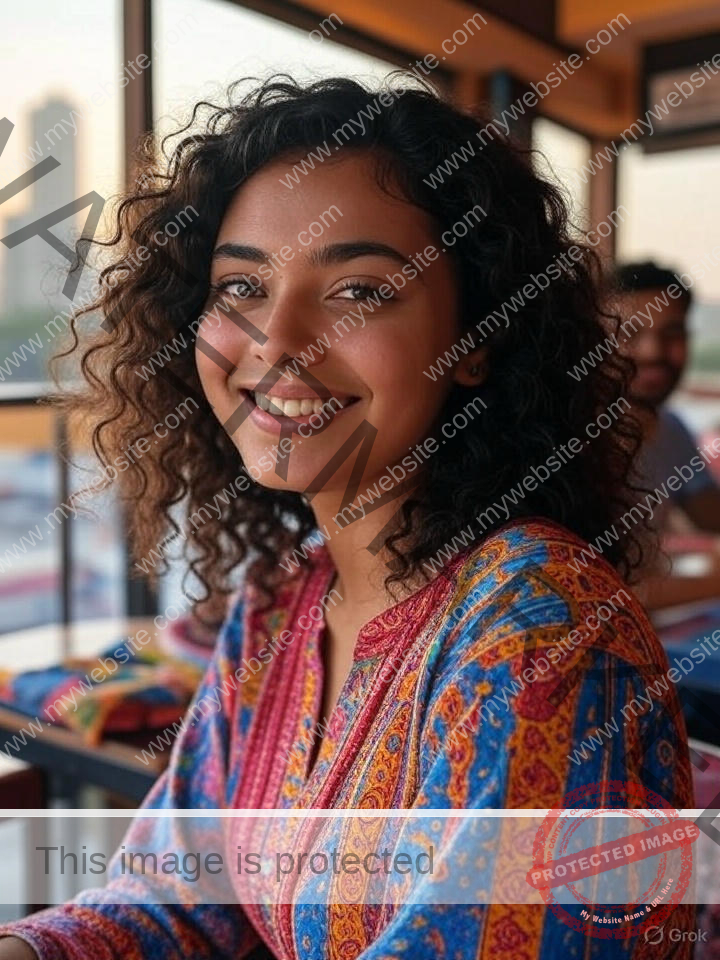
Picture this: Maya, 32, sitting cross-legged on her balcony in Bangalore, sipping filter coffee from a steel tumbler, staring at the sunrise like it’s got all the answers. She’s a history teacher at a local school, the kind who makes kids fall in love with old kings and forgotten battles. Her students adore her, her colleagues call her “dependable Maya,” and her mom keeps nagging her about “settling down.” But there’s this one thing about Maya that’s like a pebble in her chappal—she’s terrified of money. Not broke, mind you, just… scared of it. You know what happens when you grow up hearing “paisa insaan ko kharab karta hai”? It sticks. Like gum under a school desk.
Her dad, a retired postman, used to say, “Money’s the root of all evil, beta. Stay simple, stay pure.” So Maya did. She avoided stocks, ignored her friend Priya’s “side hustle” tips, and even turned down a promotion because it felt “too corporate.” She’d donate half her salary to stray dog shelters or her neighbor’s medical bills, but ask her to save for herself? Nope. “I’m fine with my books and my plants,” she’d laugh, brushing it off. But late at night, scrolling through Instagram, seeing her college friends buy flats or travel to Bali, she’d wonder: Am I missing something? Her heart said no, but her bank account whispered yes.
And then, one humid afternoon, something shifted. Maya’s school got a shiny new library—bookshelves gleaming, computers humming, all funded by some big-shot philanthropist named Arjun Sethi. The kids were over the moon, but Maya? She raised an eyebrow. “What’s this rich guy want in return?” she muttered to her colleague Ravi over lunch. Ravi just shrugged, “Maybe he’s not the villain you think, Maya. Maybe money’s not always the bad guy.”
That night, Maya couldn’t sleep. She kept picturing those kids, noses buried in new books, dreaming bigger because of that library. Could money really do that? Was her dad’s warning just… wrong?
Pause for a second. Have you ever held onto a belief so tightly it started to feel like a cage? What’s one thing you’ve been told that you’re scared to question?
Fast-forward to Monday morning, and Maya’s back in her classroom, dodging chalk dust and teenage chaos. But her mind’s elsewhere. She’s replaying her dad’s words, her mom’s sighs about “financial security,” and that library’s existence. It’s like her brain’s hosting a kitty party of doubts. You know that feeling when you’re stuck between what you’ve always believed and what life’s trying to show you? That was Maya, 100%.
At home, things weren’t helping. Her younger brother, Vikram, fresh out of college, was all about “crypto this, startup that.” Over dinner, he’d ramble about his friend who made a fortune selling NFTs. Maya rolled her eyes so hard she nearly saw her past life. “Vikram, that’s just gambling with extra steps,” she snapped. But later, washing dishes, she caught herself thinking: What if he’s not totally wrong? Her best friend Priya didn’t help either. Priya ran a small catering business and kept nudging Maya to invest in it. “Come on, Maya, put in 50K, and we’ll split the profits. It’s not evil—it’s samosas!” Maya laughed it off, but Priya’s words stung. Why was saying yes so hard?
Then there was the office. Her principal, Mrs. Nair, offered her a chance to lead a new after-school program—better pay, more responsibility. Maya’s first thought? More money means more stress. What if I become one of those greedy types? She pictured herself turning into a Bollywood villain, twirling a mustache, chasing cash. Ridiculous, right? But that’s what fear does—it paints silly pictures that feel so real.
The breaking point came at a school event. Arjun Sethi, the philanthropist, showed up to inaugurate the library. Maya expected a flashy suit, but he was in a simple kurta, chatting with kids like an uncle. He spoke about his late sister, a teacher, and how he used his wealth to honor her dream of education for all. Maya felt a lump in her throat. This wasn’t a villain. This was a guy using money to heal, to build, to love.
Driving home, Maya pulled over, staring at the city lights. She realized she wasn’t just scared of money—she was scared of what it might say about her. What if chasing it made her less… her? But what if not chasing it kept her stuck?
Think about it. What’s one dream you’re holding back from because of a “what if”? How would your life look if you took one tiny step toward it?
You know that moment when you’re eating a dosa, and suddenly you get why the chutney and sambar make it perfect together? That’s what happened to Maya one Sunday morning, sitting in her tiny puja room, staring at a flickering diya. She’d been mulling over Arjun Sethi’s library, her brother’s crypto rants, and Priya’s samosa empire. Her dad’s voice—“paisa kharab karta hai”—felt like an old cassette stuck on repeat. But then, like a WhatsApp forward that actually makes sense, a thought hit her: What if money’s just a tool, like a pen or a prayer? It’s not good or bad—it’s what you do with it.
Maya remembered her favorite line from the Gita—about doing your work without attachment to the results. Money, she realized, was like that. It wasn’t the villain in a masala movie; it was just… energy. Like the electricity running her fan or the love she poured into her students. She thought about her mom saving for years to buy her a gold chain for her wedding-that-never-happened. Was that money evil? Nah, it was love in coin form. And Arjun’s library? That was money turning into dreams for kids who’d never had a shot.
But here’s the kicker—she had to own her part in this. Avoiding money wasn’t keeping her pure; it was keeping her stuck. You know what happens when you dodge something too long? It starts running your life. Maya saw it in her colleague Ravi, who hoarded every rupee like it was his last idli, and in her cousin Neha, who spent like there was no tomorrow, then cried over credit card bills. Both were trapped, just in different cages. The spiritual penny dropped: Money wasn’t the problem—her fear of it was.
So, Maya tried a little experiment. She took 500 rupees from her savings and bought art supplies for her class. The kids’ faces lit up, painting like mini Picassos. That wasn’t corruption—that was joy. She felt it, deep in her gut: Money could carry her intentions, good or bad. It was her choice.
Pause for a moment. What’s one thing you’ve been avoiding because you’re scared it’ll change you? Could it be a tool for something beautiful if you used it differently?
Okay, so Maya’s had her big “aha” moment, but now what? You can’t just sit under a banyan tree and hope wisdom pays the bills. Maya needed to act, and fast, before her old fears crept back like uninvited relatives at Diwali. So, she grabbed her notebook (the one with the cheesy “Dream Big” cover) and started jotting down small, doable steps. Nothing fancy, just real stuff, like she was planning a school trip.
First, she called Priya. “Alright, tell me about this samosa business,” she said, half-expecting to regret it. Priya was thrilled, explaining how 50,000 rupees could buy a new oven, double their orders, and split profits 60-40. Maya didn’t jump in headfirst—she wasn’t ready to be a samosa tycoon yet—but she promised to think about it. Step one: Open the door to possibility. She also signed up for the after-school program Mrs. Nair offered. More work, yes, but also more pay. She decided to save half of it for herself—not for gold chains, but maybe a course on financial planning. Step two: Say yes to growth.
Then came the fun part. Maya started a “good money jar” at home. Every time she used money with intention—like buying groceries for her elderly neighbor or donating to a local NGO—she’d write it down and toss the note in the jar. It was her way of reminding herself: Money can be love, service, dreams. Not evil. Step three: Celebrate the small wins.
At school, she even started sneaking little lessons into her history classes. “You know how Emperor Ashoka built hospitals with his wealth?” she’d tell her students. “Money’s just a tool. What would you build with it?” The kids’ answers—libraries, animal shelters, even a “pizza for everyone” fund—made her laugh and think. She was learning, one step at a time, that money wasn’t her enemy. It was her ally, if she let it be.
Think about it. What’s one tiny action you could take today to use something you’re scared of—like money, time, or even love—in a way that feels true to you? What would that first step look like?
You know that feeling when you’re halfway through a spicy biryani and need to stop, sip some water, and just process the flavors? That’s where Maya was one evening, sprawled on her living room floor, staring at her “good money jar” filled with scribbled notes. Each slip was a tiny story—buying books for her students, treating her mom to her favorite jhumkas, pitching in for a colleague’s kid’s school fees. Her heart felt like it was doing a happy bhangra, but her head? Still a bit like peak-hour Bangalore traffic—jammed with questions.
She thought about her dad, who’d spent years warning her that money corrupts. Sitting there, she whispered to his memory, “Papa, I get why you said it, but… what if money can also heal?” She pictured Arjun Sethi’s library, her students’ excited chatter, and even Priya’s samosa dreams. Money had built those moments, not ruined them. But then she caught herself overthinking—classic Maya move. What if she chased wealth and turned into one of those flashy types who forgets their roots? Or worse, what if she failed and proved everyone right?
So, she went to her balcony, where she watched the street dogs curl up under the chaiwala pack up his stall. Life was still simple, messy, beautiful. She realized something: she didn’t need to have it all figured out. Maybe the point wasn’t to master money but to dance with it, one step at a time. She thought of her students, who’d told her they’d build “pizza funds” or “stray dog homes” with their imaginary wealth. Kids get it, she thought. They don’t overcomplicate. Why do we?
Maya grabbed her phone and texted Priya: “Let’s meet about that samosa plan. I’m in for 10K to start.” Her thumb hovered, heart racing, but she hit send. It wasn’t a leap—it was a tiptoe. And that felt just right.
Take a second. What’s one belief you’ve been carrying that feels heavy? What’s the smallest step you could take to test if it’s really true?
So, picture Maya a few months later, sipping coffee at her favorite café, laughing with Priya over their samosa venture’s first profit—enough to buy a new mixer and donate to a local orphanage. She’s still teaching, still dodging her mom’s “shaadi kab?” questions, but there’s a lightness to her now. You know what happens when you let go of a fear? It’s like dropping a backpack full of bricks—you didn’t realize how much it was weighing you down.
Maya’s learned money isn’t the villain her dad warned about. It’s like fire—dangerous if you’re careless, but warm and life-giving if you respect it. She thinks of the Upanishads, where they talk about seeing the divine in everything. Why not money, too? It’s not about hoarding or showing off—it’s about intention. Like when she paid for her neighbor’s kid’s dance classes or when Vikram (yes, crypto bro Vikram) chipped in for their mom’s cataract surgery. Money carried their love, their dreams, their kindness.
She still has her “good money jar,” now overflowing with notes. Her students tease her about it, calling it “Miss Maya’s magic jar.” And maybe it is magic—not the sparkly Bollywood kind, but the quiet, soul-deep kind. Maya’s not rich yet, and she’s okay with that. She’s building, growing, giving. And every time doubt creeps in, she remembers Arjun’s library, her kids’ smiles, and thinks, “If money can do that, I’m not scared of it anymore.”
So, my friend, as we finish our chai, let’s raise a toast to Maya—and to you. Keep questioning those old stories. Keep taking those tiny, brave steps. And maybe start your own “good money jar.” Who knows what magic you’ll find?
Think about it. What’s one way you could use something you’ve feared—like money, time, or even vulnerability—to create a little light in the world? What would that feel like?
So, here’s Maya, sitting at her favorite roadside dosa stall, the one where the uncle flips crispy dosas like he’s auditioning for a Bollywood montage. It’s a Saturday evening, and she’s got her “good money jar” notes spread out on the table, reading them like love letters to herself. There’s one about buying paintbrushes for her students, another about helping her neighbor’s kid with dance classes, and one—just for her—about signing up for an online course on personal finance. She’s smiling, but there’s this quiet buzz in her chest, like she’s standing at the edge of something bigger. You know what happens when you realize the world’s not what you thought it was? It’s scary, but also… exciting.
Maya’s been thinking about her dad’s old warnings—“paisa kharab karta hai”—and how they kept her small, safe, stuck. But now, she sees it: Money’s not the villain in this story. It’s like the masala in her dosa—too much, and it’s a mess; just right, and it’s magic. She’s started dreaming bigger, not just for herself but for her community. Maybe she’ll save up to start a scholarship for her students. Maybe she’ll join Priya’s samosa empire full-on. Or maybe she’ll just keep filling her jar with small, intentional acts. The point is, she’s not running from money anymore—she’s dancing with it.
But here’s the thing: Maya’s journey isn’t done. Every step she takes—whether it’s investing 10K with Priya or saying yes to that after-school program—feels like a prayer. Not the loud, temple-bell kind, but the quiet, “I trust the universe” kind. She’s learning to ask herself: What’s my intention? Is it to hoard, to show off, or to create something meaningful? That question’s become her compass, guiding her through office gossip (like when Ravi bragged about his new car), family pressure (her mom’s still on about that shaadi), and her own overthinking (what if she’s not “spiritual” enough anymore?).
So, my friend, as Maya finishes her dosa and watches the sunset paint the sky, she’s got an invitation for you. Take a peek at your own “money story.” Maybe it’s not money—maybe it’s time, love, or ambition you’ve been dodging. Whatever it is, try one small, brave thing. Put a coin in a jar for a cause you love. Say yes to a chance that scares you. Ask yourself what your heart wants to build. You don’t need to have it all figured out—just take a step. The universe always meets you halfway.
Pause for a moment. What’s one fear you’ve been carrying about something in your life—money, success, or even love? What’s one tiny, intentional act you could do today to rewrite that story?
Want to go deepen in Maya’s story, Follow here